
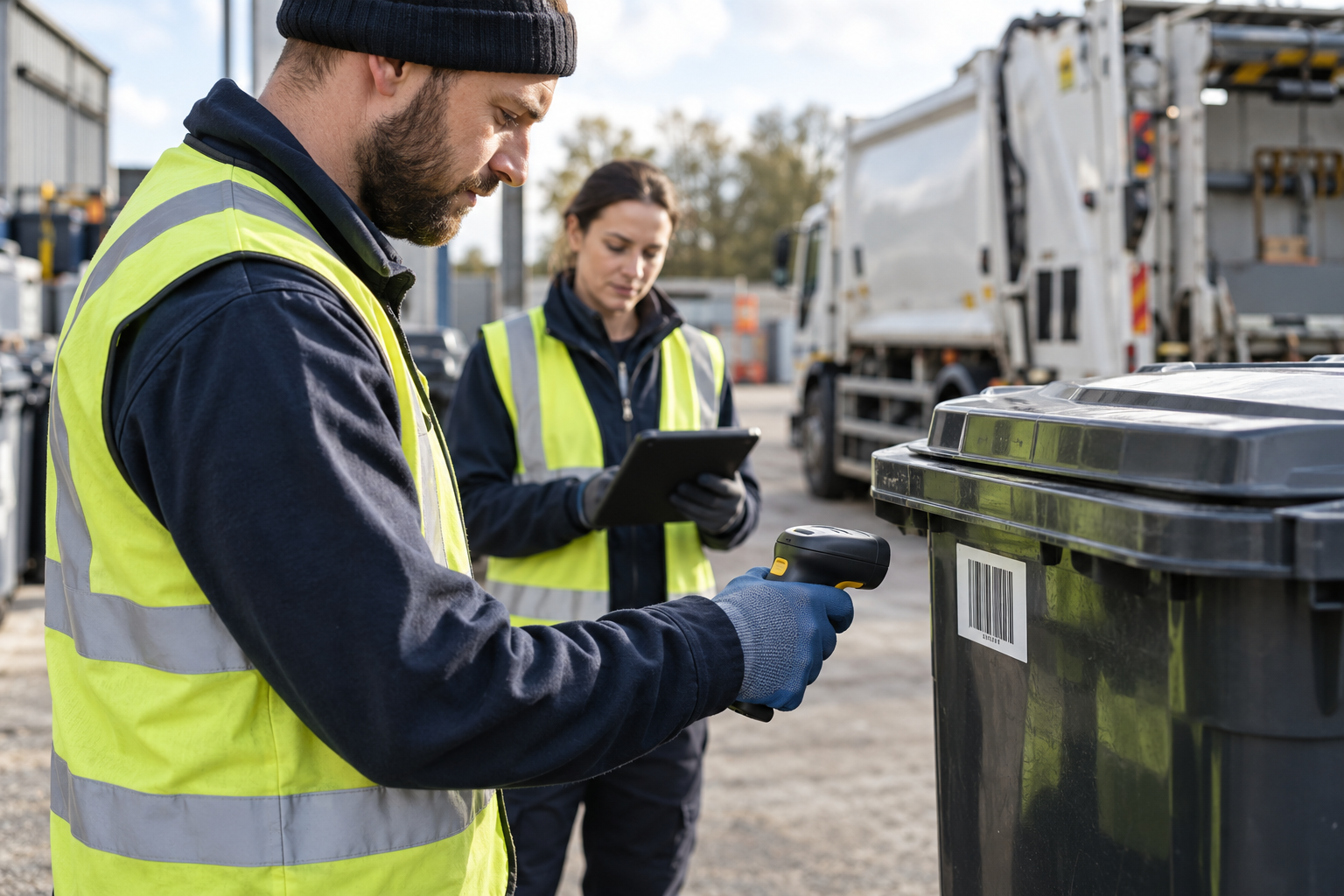
Digital waste tracking replaces a paper based record trail with a service where movements are recorded digitally. Government guidance was updated on 5 August 2026 and sets out how the service will be introduced in phases.
Source: GOV.UK, digital waste tracking service (updated 5 August 2026)
Four questions worth settling early
Does my business have to register in October 2026?
Not necessarily. The first phase applies to permitted or licensed waste receiving sites in England and Wales from October 2026, with Scotland and Northern Ireland following in January 2027. Many producers of waste are not in that first group. Check the official guidance for your activity and nation rather than assuming a single national start date.
Are waste transfer notes gone?
Do not assume so. Phase one is about receiving sites recording movements digitally. Your existing duty of care obligations, including describing your waste accurately and checking that whoever takes it is authorised, continue to apply. Keep your documentation working until you have confirmed what replaces it for your specific activity.
What about exempt activities?
Exemptions are not included in phase one. If your operations rely on a registered exemption, the timing of any obligation will differ, and the sequencing for later phases should be confirmed against the official text rather than inferred.
Will our waste contractor simply handle it?
Partly. Contractors and receiving sites will carry much of the mechanics, but the description of the waste, the site information and the accuracy of what is presented come from you. Poor data at the point of collection becomes poor data in the tracking record.
Source: GOV.UK, digital waste tracking service (updated 5 August 2026)
What to prepare now, whatever your phase
- Confirm a definitive list of your sites, with accurate addresses and any permit or exemption references.
- Review your waste descriptions and codes. Vague descriptions inherited from an old contract are a likely source of error.
- Check that every carrier, broker and dealer you use is authorised, and record the check.
- Identify who in the business is accountable for waste documentation at each site, by name, not by department.
- Agree with your contractor how weights and destinations will reach you, and in what format.
Why this is worth doing early
Digital records are less forgiving than paper ones. A description that was never quite right, or a site record that does not match the permit, is easy to overlook on a transfer note and conspicuous in a structured dataset. Organisations that tidy this up before their obligation starts tend to find the transition unremarkable.
There is also a useful side effect. The same data hygiene that satisfies a tracking service is what makes internal reporting trustworthy, because you can finally aggregate by material and site without cleaning the file first.
What to ask a software provider
If a supplier offers to handle digital waste tracking for you, ask which government submission workflow the product supports, how records are produced and corrected, and who is accountable for the submission itself. Then ask for a demonstration using a realistic movement rather than a slide. A product that records material movements accurately on site is useful in its own right, but that is a different thing from submitting to the government service, and the distinction is worth confirming in writing before you commit.