

Understand the inputs.
Our material intelligence platform aggregates and interrogates product and packaging data, creating a structured view of the materials entering an organisation.
Explore collabor8 →For more than fifteen years, co-cre8 has focused on resources, not just waste.
One conclusion has remained consistent: waste is the outcome of decisions made much earlier. What organisations specify, purchase and use ultimately determines what they later have to manage.
So rather than starting at the bin, we look across the whole material journey.
Understand. Manage. Improve.
It's how we connect what comes into an organisation with what ultimately leaves it, and use the evidence from both to make the next decision better.
Buy & specify
Product and packaging choices
Use
Materials enter the operation
Separate & collect
Keep useful materials distinct
Recover & remake
Create the next useful form
Return to the business
Bring the product back into use
Three areas of expertise that can work independently, but become more powerful when connected.
01 / 03
We establish what products, packaging and materials enter your organisation, how they move through it, what they cost and where opportunities for change exist. By bringing together procurement, material and waste information, we create the evidence needed to make better-informed decisions.
Know what comes in.
Explore Understand →02 / 03
We put the right waste and recycling systems in place and make sure they continue to perform. From complete contract management to data and performance oversight or specialist material recovery, we coordinate services, suppliers, compliance and reporting while continually identifying opportunities to improve performance and reduce cost.
Know what happens to it.
Explore Manage →03 / 03
We use what we've learned from both material inputs and operational outputs to influence the next decision. That means preventing unnecessary materials, introducing reuse, improving specifications, making informed substitutions, increasing recycling and finding higher-value applications for recovered resources.
Change what happens next.
Explore Improve →Most waste is settled long before the bin: what was bought, how it was specified and how it was packaged. Improve those decisions and there is less waste to manage, less avoidable cost and more material worth recovering.
The chain below shows why connecting purchasing decisions with operational evidence creates a fuller view of the material journey.
Material, format and cost are decided here.
Packaging and suppliers get locked in.
Material moves through your sites and your operation.
The visible end of decisions made months earlier.
You pay to remove what you paid to bring in.
Waste is simply a resource that has reached the end of its current use. We start earlier, looking at what is being purchased, why it is needed, how it is used and what ultimately happens to it. That creates more opportunities than starting with disposal alone.
Procurement knows what the organisation buys. Waste management knows what it throws away. Historically, the two rarely meet. We connect them. Understanding both sides of the material journey provides a much stronger basis for preventing waste, improving systems and making better purchasing decisions.
Good decisions depend on good information. We establish the most credible baseline available, interrogate the evidence and identify where intervention can have the greatest commercial, operational and environmental impact. Where information is missing, we work to establish it rather than filling the gap with assumptions.
Recycling matters, but it isn't the starting point. We first ask whether a material can be prevented or reduced, then whether it can be reused or better specified, before determining the best available recycling or recovery route. The objective is always the highest and best use of resources.
Material challenges rarely sit with one organisation alone. Customers, suppliers, manufacturers, waste contractors and recyclers each control different parts of the journey. We bring those parties together where collaboration can unlock an outcome that would be difficult to achieve independently.
We don't believe in producing a strategy and walking away. Understanding creates opportunities. Managing generates new evidence. Improvement changes the system. We measure what happens next and feed that learning back into the next decision, creating a cycle of continual improvement.
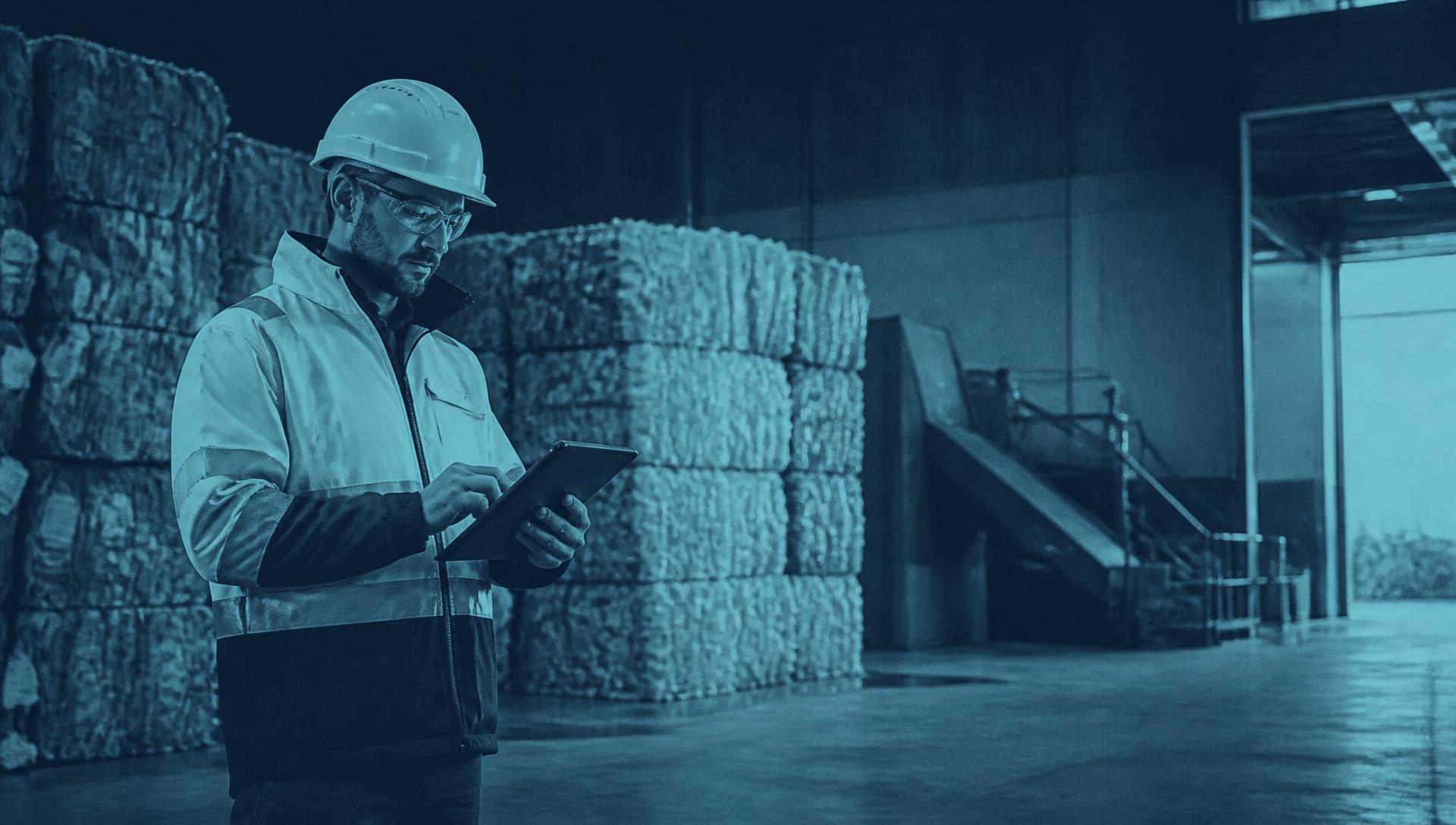
Evidence becomes useful when it changes what happens to real material.
See the evidence →Traditional waste systems focus predominantly on outputs, collections, weights and costs recorded after materials have already become waste. But many of the decisions that determine those outputs were made much earlier. That's why we've developed technology to provide greater visibility across the material journey.
Our material intelligence platform aggregates and interrogates product and packaging data, creating a structured view of the materials entering an organisation.
Explore collabor8 →
Our waste management platform consolidates service, collection, weight, cost and performance information across sites and suppliers.
Explore oper8 →
Our specialist collection services provide dedicated routes for selected materials that aren't always effectively captured through conventional waste systems.
Explore separ8 →Data can tell you what is happening. The real value comes from understanding why it is happening and what to do next. Our experience across materials, procurement, waste, recycling, compliance and circularity enables us to interrogate information from across the material journey and understand its wider implications. It's the combination of data, technology and resource expertise that turns information into action.
Understand, Manage and Improve aren't three stages every customer has to follow. An organisation might start by analysing the products and packaging it purchases, by reviewing its waste operation, by consolidating a national waste contract or by solving a specific material challenge. Each can work independently. But when connected, they create something more powerful:
What comes in?
What happens to it?
What should happen next?
What did we learn?
The evidence generated through each part of the system informs the next, creating a continual cycle of better resource decisions.
collabor8 · Consulting & Advisory
Waste & Recycling Management · oper8 · separ8
Prevention · Reuse · Substitution · Circular Products · Honest
All supported by the same co-cre8 approach: understand the evidence, manage the reality and continually improve the outcome.
You don't need to buy the whole system. Tell us what you're trying to understand, manage or improve and we'll start there.