ManageImprove

Lloyds Banking Group

Pioneering the 'bin for life'

The jointly developed rBin is manufactured from UK-sourced recycled materials and is designed to be more easily refurbished than replaced.

Lloyds Banking Group, Pioneering the 'bin for life'
Problem

Lloyds Banking Group had already cut operational waste by 80% from a 2014/15 baseline, and recognised it could do significantly better at turning its remaining hard-to-avoid waste into a resource.

Outcome

The jointly developed rBin, made from UK-sourced recycled material and designed to be refurbished rather than replaced, is now in full production with more than 250 units rolling out across 16 office sites.

Client context

Lloyds Banking Group is the UK's largest financial services provider, with 28 million customers and a history going back over 325 years.

It has committed to achieve net zero carbon operations by 2030 for its direct emissions (Scope 1 and 2), with a target reduction of at least 90% compared with 2018/19 levels. It is also working towards TRUE certification at a number of its larger hubs and Zero Waste Europe accreditation at group level.

The issue

Waste avoidance has been, and will always remain, Lloyds Banking Group's key priority. To evidence that commitment it has reduced operational waste across its offices, branches and data centres by 80% from a 2014/15 baseline.

Having reached that point, Lloyds Banking Group recognised that it could still do significantly better at turning more of its hard-to-avoid waste into a valuable resource. It set out a framework built around environmental impact avoidance, and collaborated with co-cre8 to design a new generation of sustainable recycling stations that would more effectively segregate both recycling and hard-to-recycle materials across its office estate.

The solution

Working under its Honest brand, co-cre8 set out to design and manufacture a new type of recycling collection station: the rBin.

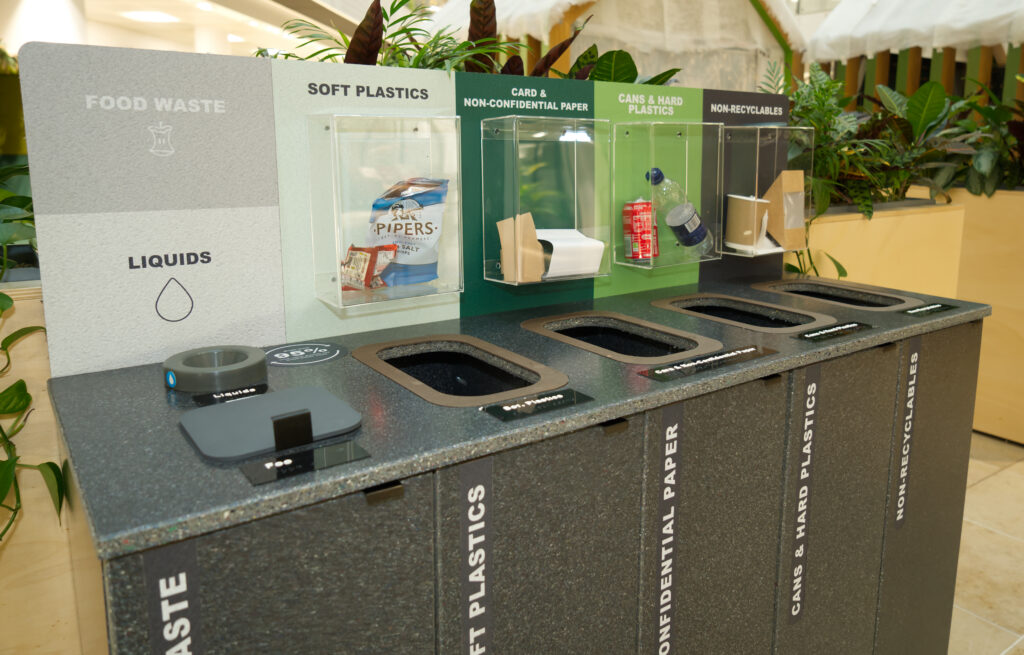
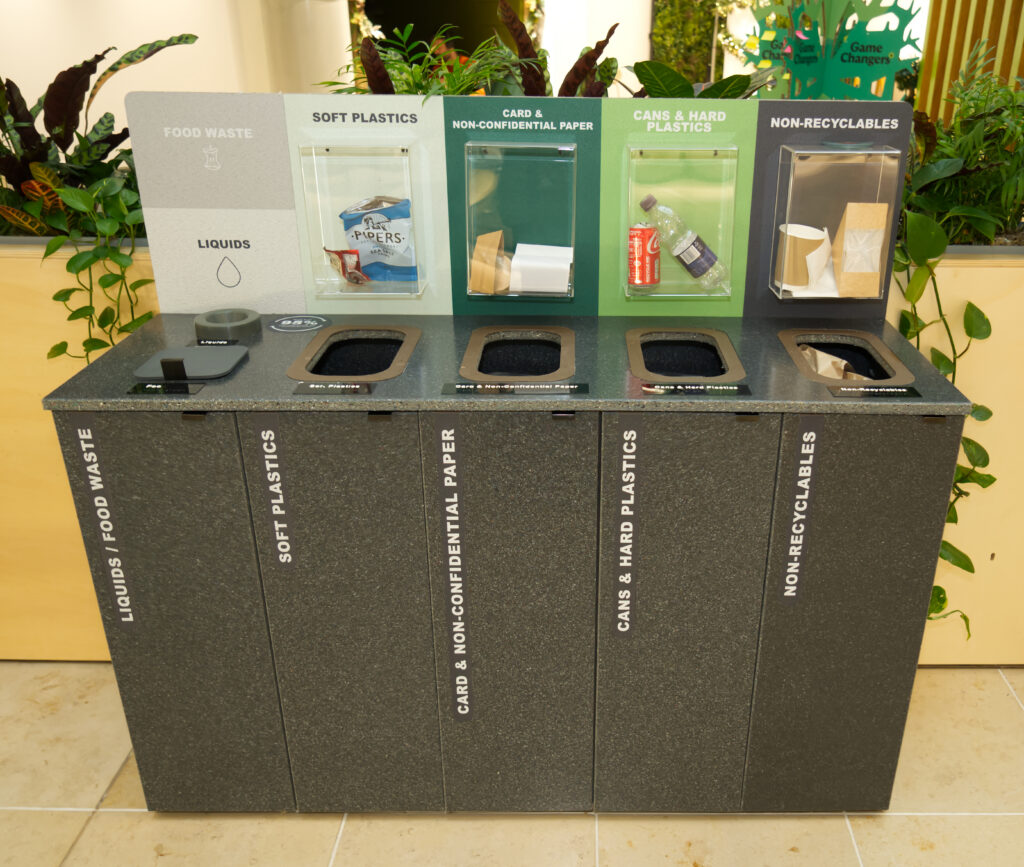
The rBin separates multiple waste streams and can be custom branded to Lloyds Banking Group's requirements. Each unit is made from Regency Recycled Plastic Board, a product from co-cre8's manufacturing partner containing 95% locally sourced recycled materials, including used coffee grounds and recycled plastics, and manufactured in the UK.

Those materials include Lloyds Banking Group's own legacy recycling stations, which the rBin has now superseded. As each legacy station is replaced it is collected by co-cre8 and brought back into the recycling process so that it can be used in the manufacture of new rBins.

Flexibility is a significant feature. The modular design can be adapted quickly to the needs of the customer, and it results in a product that is easier to refurbish than to replace.

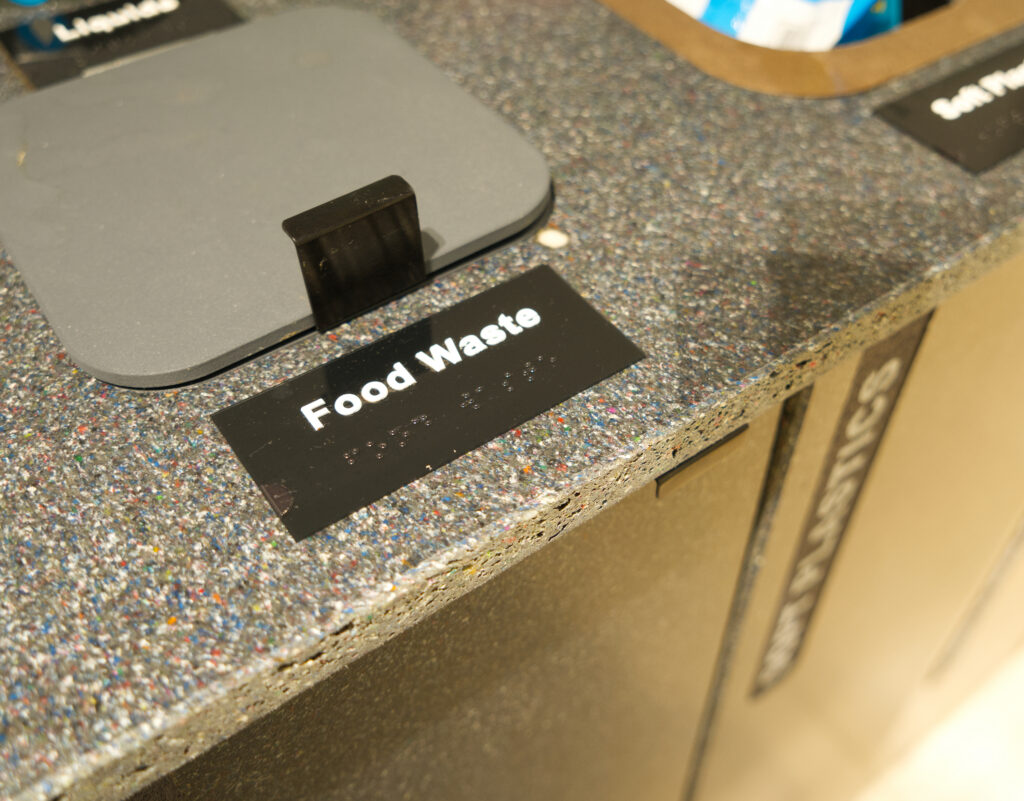
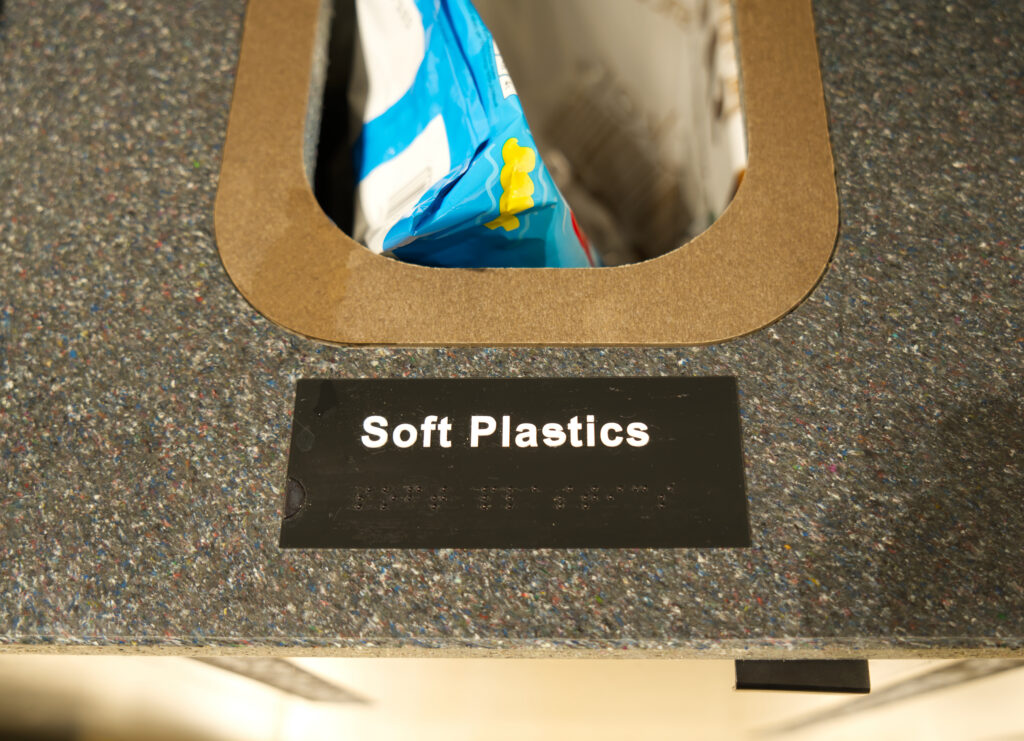
Years of implementing recycling schemes have taught co-cre8 that success comes from customer engagement and accessibility. It is not only about helping end users put the right materials in the right compartments, or positioning bins in the right place, but about changing behaviour so that people instinctively do the right thing. The rBin therefore displays visual examples of each waste stream to assist neuro-divergent users, and braille for the visually impaired.

The rBin has been designed to house individual compartments for six streams of waste: soft plastics, card and paper, cans and hard plastics, non-recyclables, food waste and residue liquids from beverage containers.

Production challenges

As with any pioneering project using recycled materials, an honest approach to manufacturing brings challenges. Recycled materials are inherently inconsistent compared with virgin ones, so there has to be a collective understanding of what perfect imperfection will look like. The end point is more rewarding, but the journey is harder.

To overcome this, Lloyds Banking Group and co-cre8 collaborated closely, from design and sampling right through to mass production.

Results

Following an intense initial phase, with multiple prototypes user tested within Lloyds Banking Group's estate, an optimum rBin design specification was achieved. The rBin is now in full production, with more than 250 units being rolled out across 16 Lloyds Banking Group office sites.

The reaction from employees has been excellent. There has been greater engagement with the units thanks to their intuitive visual design and accessibility, and they allow Lloyds Banking Group to communicate a deeper sustainability story with its colleagues.

80%

Operational waste reduction from a 2014/15 baseline

250+

rBin units rolling out across 16 office sites

95%

Locally sourced recycled content in the board used

In their words

“Waste avoidance has been and will always remain a key priority.”

“Our mission is to turn waste into a resource at every opportunity whilst also taking the opportunity to encourage every colleague in our business to engage and make a contribution towards creating less waste and, thereby, to become an active participant in a circular solution.”

Mike Stitt · Sustainability Manager, Lloyds Banking Group

“Nothing demonstrates the effectiveness of recycling programmes more than when you develop products made from the same materials you have collected.”

“The rBin represents a huge opportunity for Lloyds Banking Group and other organisations with progressive sustainability ambitions. Furthermore, should any part of the rBin become damaged down the line, we can easily refurbish it rather than having to replace the whole unit. So, despite the challenges faced along the way, there is huge value in creating new products in the UK from locally sourced recycled materials that are designed with both longevity and legacy at its core.”

Peter Goodwin · Managing Director, co-cre8
Watch
In place
Five stream segregation station with clear stream signage at a Lloyds Banking Group site
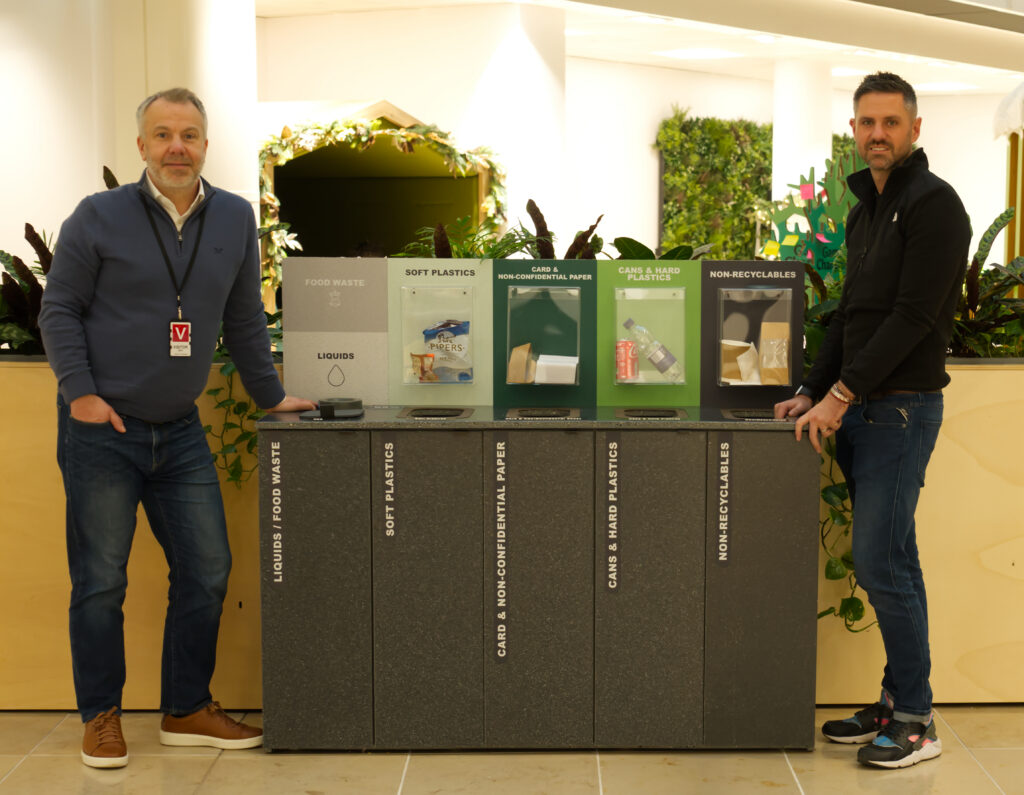
The co-cre8 team alongside the installed bin for life unit
Close up of the recycled material worktop and the braille food waste label
Soft plastics aperture with braille signage on the recycled material top
Where this fits

The thinking behind this work runs through the rest of what we do.